

In today’s digital age, creating and managing online communities is crucial for businesses, influencers, and educators alike. Two popular platforms that have gained significant attention are GoHighLevel (GHL) and Skool. Both offer unique features and cater to different needs. In this post, we’ll compare GHL Communities and Skool Communities to help you decide which platform is best for you.
What is GoHighLevel?
GoHighLevel (GHL) is an all-in-one marketing platform designed for agencies. It offers a suite of tools including CRM, email marketing, SMS marketing, landing pages, and more. GHL Communities is a feature within this platform that allows users to create and manage online communities. It’s particularly useful for businesses that want to integrate community management with their marketing efforts.
What is Skool?
Skool is a community platform designed specifically for online educators and coaches. It focuses on providing a structured and engaging learning environment. Skool Communities allow users to create courses, host discussions, and manage memberships all in one place. It’s an excellent choice for those looking to build educational communities with a strong focus on content delivery and interaction.
Comparing GHL Communities and Skool Communities
When comparing GoHighLevel (GHL)vs.Skool Communities, it’s essential to consider several factors such as ease of use, features, customization, and pricing. Let’s dive into each of these aspects.
Ease of Use
GoHighLevel GHL offers a user-friendly interface, but its wide range of features can be overwhelming for beginners. The platform is designed for marketing agencies, so it has a steep learning curve if you’re not familiar with marketing tools.
Skool: Skool is designed with simplicity in mind. Its clean interface and intuitive navigation make it easy for educators and learners to use. The platform focuses on community building and learning management, making it straightforward for those with limited technical skills.
Winner: Skool wins in terms of ease of use due to its simplicity and focus on educational communities.
Features
GHL Communities Features
GoHighLevel: GHL is a powerhouse when it comes to features. It offers CRM, email marketing, SMS marketing, landing pages, funnels, appointment scheduling, and more. GHL Communities can leverage these tools to create a holistic marketing and community management experience.
- Group Creation: Create multiple groups based on specific interests, with options to soft delete and restore.
- Domain Setup: Set up a custom domain or use a pre-configured subdomain for a personalized experience.
- Community Customization: Customize group names, descriptions, URLs, branding, and promotional links.
- Group Management: Assign roles like admins and moderators, with enhanced filtering and email visibility security.
- Membership Management: Members join via unique URLs, participate in multiple groups, and have searchable profiles.
- Learning and Networking: Engage in courses, discussions, polls, and connect with others.
Skool Features
Skool: Skool focuses on providing features that enhance learning and community engagement. It offers course creation, membership management, community discussions, and progress tracking. While it lacks the extensive marketing tools of GHL, it excels in educational features.
- Community Creation: Easily create and manage your own community.
- Course Management: Build and manage courses with structured content.
- Membership Management: Handle memberships and access levels seamlessly.
- Discussion Boards: Facilitate engaging community discussions.
- Progress Tracking: Track learner progress and engagement.
- Simple Interface: User-friendly design for effortless navigation.
- Mobile Friendly: Access and manage communities on mobile devices.
- Event Scheduling: Schedule and manage community events and activities.
Winner: It’s a tie. GHL is better for businesses needing comprehensive marketing tools, while Skool is ideal for educational communities.
Customization
GoHighLevel: GHL offers extensive customization options. Users can tailor their communities to fit their brand with custom landing pages, email templates, and workflows. This level of customization is perfect for agencies that want to maintain brand consistency.
Skool: Skool offers limited customization compared to GHL. However, its simplicity ensures that users can quickly set up and manage their communities without getting bogged down by too many options.
Winner: GHL wins for those who need extensive customization. Skool is better for users who prioritize simplicity.
Pricing
GoHighLevel: GHL offers various pricing plans, starting at $97 per month. While it may seem pricey, the extensive features justify the cost, especially for agencies that can fully utilize its capabilities.
Skool: Skool offers a straightforward pricing plan at $99 per month. It provides all the essential features needed for community and course management, making it a cost-effective choice for educators.
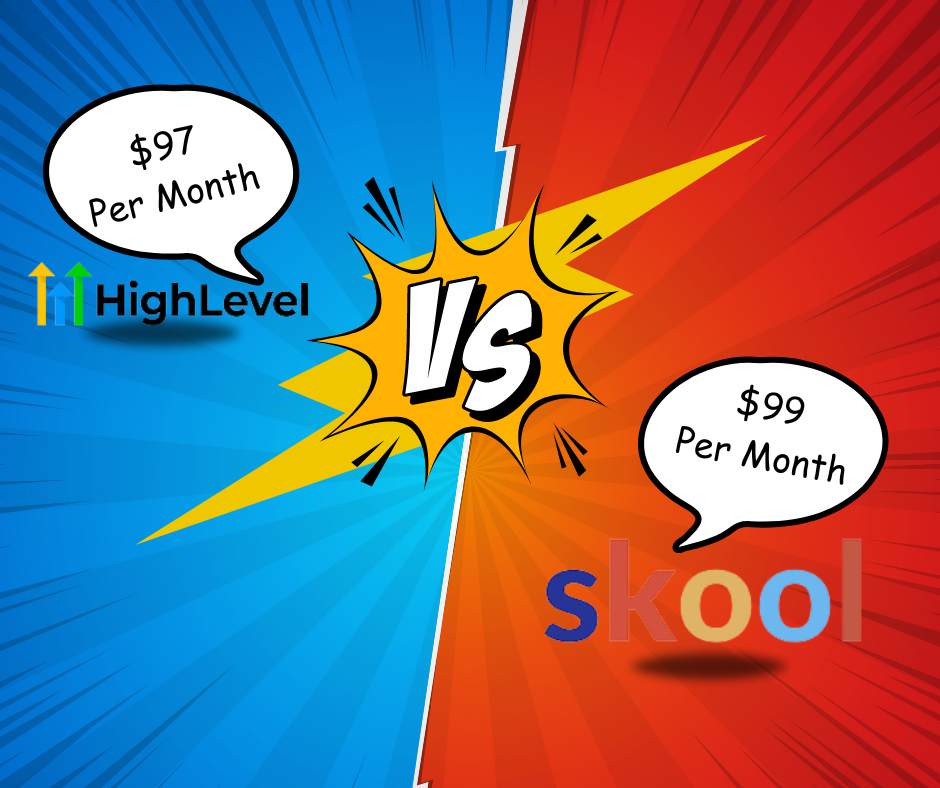
Winner: Skool wins in terms of straightforward and affordable pricing for educational communities. GHL offers more value for agencies that need a comprehensive marketing suite.
Pros and Cons
GoHighLevel
Pros:
- Comprehensive marketing tools
- High customization options
- Integrated CRM and automation features
Cons:
- Steep learning curve
- Higher cost for smaller businesses
- Overwhelming for users needing only community features
Skool
Pros:
- Easy to use and set up
- Focused on education and community engagement
- Affordable pricing
Cons:
- Limited customization
- Lacks advanced marketing tools
- Best suited for educational purposes only
Conclusion
Choosing between GHL Communities and Skool Communities depends on your specific needs. If you’re running a marketing agency or a business that requires robust marketing tools alongside community management, GoHighLevel is the way to go. However, if you’re an educator or coach looking to build an engaging and straightforward online learning community, Skool is the better choice.

Ultimately, both platforms offer excellent features and can help you build thriving online communities. Consider your goals, budget, and technical expertise when making your decision.